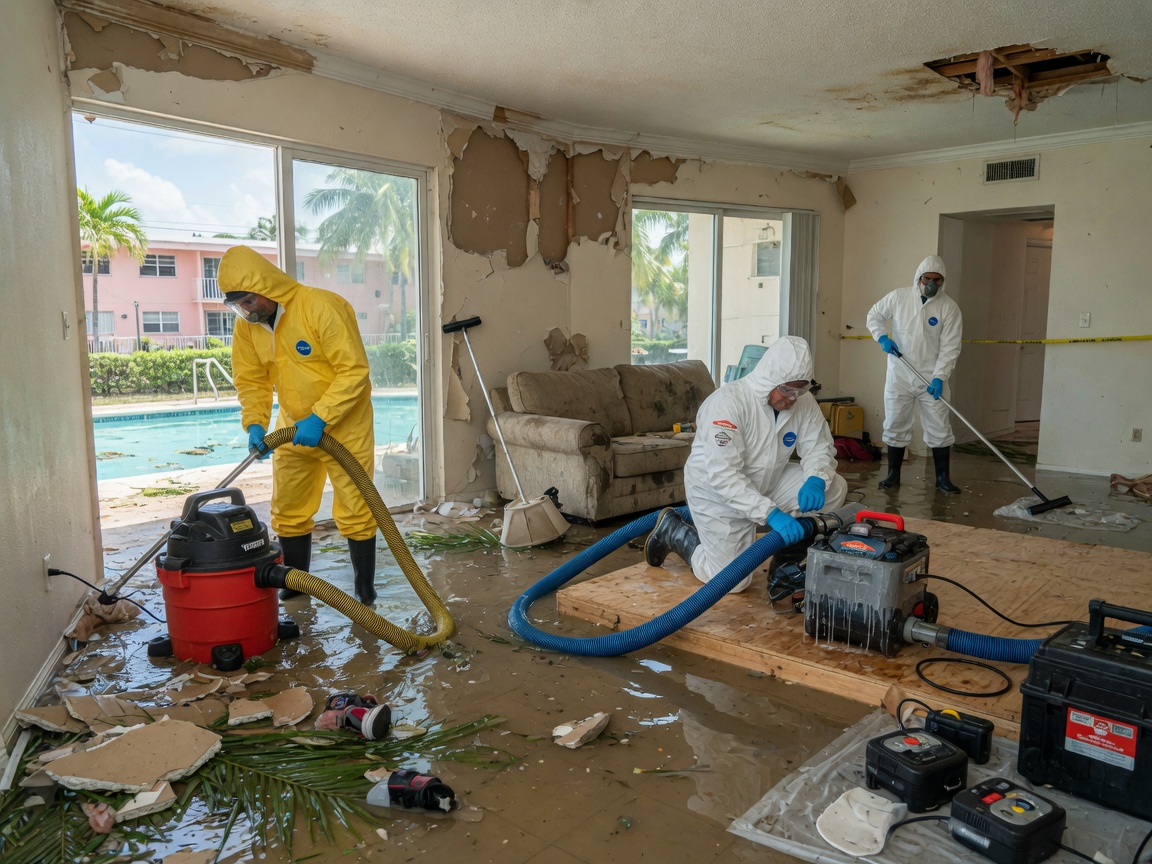
Emergency water removal is the first hour of the job, and it is the hour that decides how much of the house you keep. Truck-mounted extraction pulls free water off tile, vinyl, and carpet. Then we deal with what soaked in: the pad, the tack strip, and the gap under the baseboard where water sits against CBS block.
On a Miami slab the water does not pool in a basement. It runs along the grout, under the tile, and into the next room. We meter the rooms that look dry before we leave. A hallway that looks fine often reads wet at the bottom of the wall, and that is the wall that grows mold in two days if nobody checked it.
The source might be a failed interior supply line, a water heater, a toilet, or storm water through a roof. Extraction looks similar. Drying does not. After the free water is gone we pin-meter drying until the wood hits equilibrium rather than packing up when the floor looks dry.
If the pipe is still open, what to do in the first hour is the list we give people on the phone: shut the water, keep household fans off, photograph, then wait for extraction. Household box fans push wet air into dry rooms and make the map worse.
Technician insight
The pad tells you more than the carpet face. A surface meter can read almost dry while the pad underneath is still a sponge, which is why we lift a corner before we call a room extracted.
Emergency Water Removal Services We Offer
✓Standing Water Extraction
Free water pulled from tile, laminate, vinyl, carpet, and finished concrete.
✓Carpet Pad Pull
Pad removed and bagged when it has held water, with the carpet floated when it can be saved.
✓Under-Cabinet Extraction
Kick spaces at kitchens and vanities opened, the spot surface extraction misses.
Pricing
Priced by affected area, water category, and drying days. You get the number in writing before equipment is set.