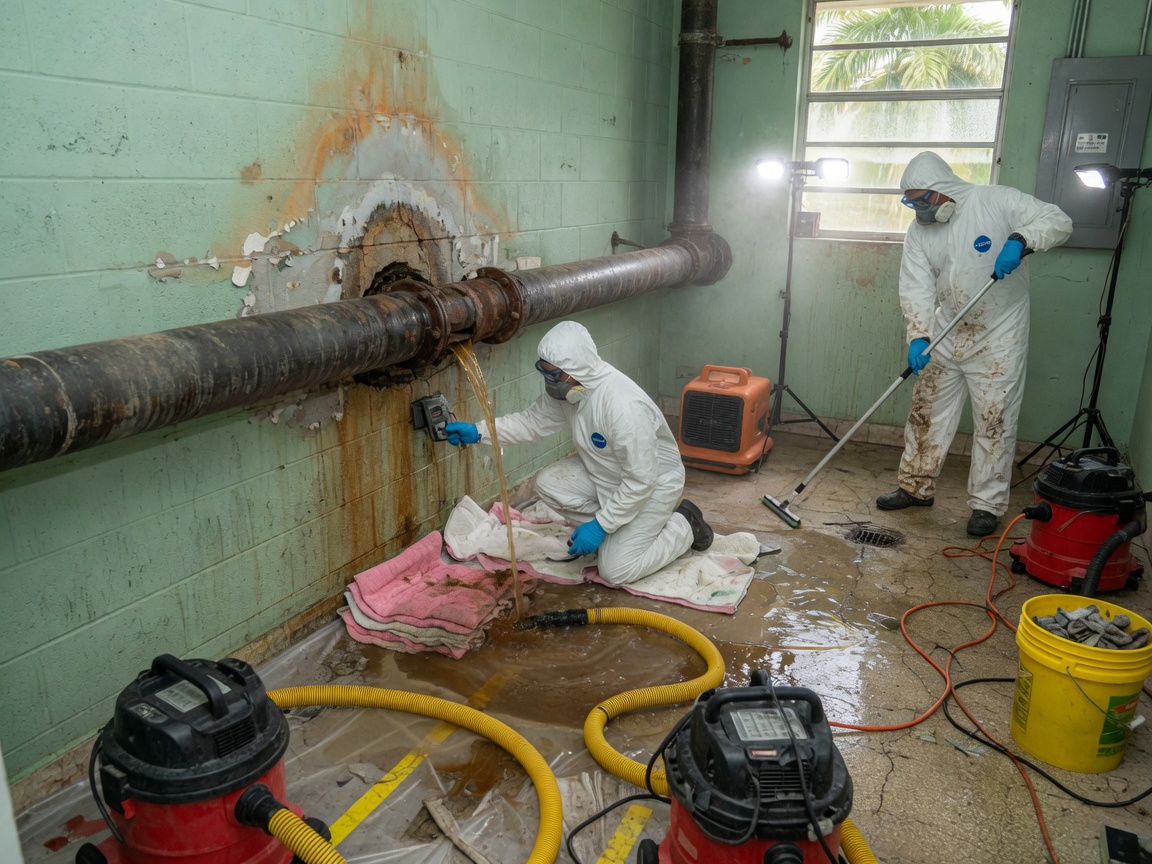
Miami houses plumbed from the 1920s through the early 1970s used cast iron drain lines. Those pipes have a service life of about 50 to 75 years, and Miami-Dade is past that window. The pipe fails at the invert first, the bottom of the run, so you often see a backup, cracked slab tile, or water coming up through the floor instead of a burst on a wall.
Once the waste line opens, the water under the slab is not clean. We treat it as contaminated sewage extraction, pull wet pad and affected carpet, and keep the work area contained. A plumber locates and repairs the pipe. We handle what already left it, including the water that traveled laterally under tile.
Drying a slab after a drain failure means getting air to the underside of the floor covering and to the first course of block. We use grain-load dehumidification rather than a ring of fans, because Miami outdoor air will not dry a saturated cavity on its own. If growth has already started on the paper face of the drywall, that becomes containment and mold removal after an independent assessor sets the scope.
If you are still deciding whether the drain is the problem, cast iron failure signs we see in Miami homes walks through the usual pattern. Recurring backups in a 1950s CBS house are a plumbing diagnosis. The water on the floor is ours.
Technician insight
Cast iron thins at the invert. A camera that only looks at the crown of the pipe will call a line healthy while the bottom is already open and feeding the slab.
Cast Iron Pipe Leak Cleanup Services We Offer
✓Under-Slab Water Extraction
Standing and trapped water pulled from the floor surface and from under lifted floor covering.
✓Affected Material Removal
Pad, tack strip, and wet baseboard pulled where they held Category 3 water.
✓Cavity Drying After a Drain Repair
Air movers and dehumidifiers set after the plumber closes the line, not while it is still open.
Pricing
Priced by affected area, water category, and drying days. You get the number in writing before equipment is set.