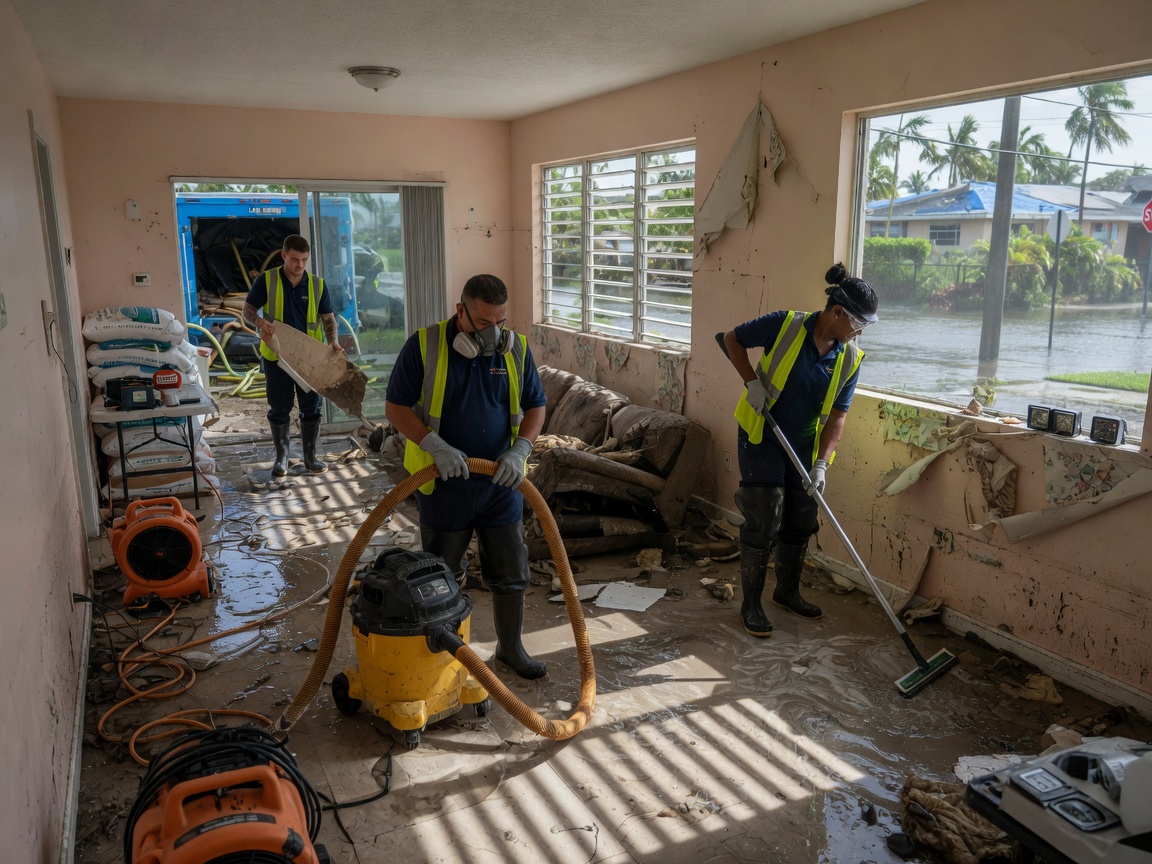
Atlantic hurricane season runs June through November. In Miami-Dade the indoor water we see after a named storm is usually wind-driven rain through roof, window, and door assemblies, not a river in the living room. That distinction matters for coverage, and it matters for how we dry the house.
Rain that came through a failed roof or a blown window is an interior water job: extract, open wet cavities, dry. Water that rose from Biscayne Bay, a canal, or the street is flood water, often Category 3, and it needs a flood policy. We photograph the entry path before anything is moved. Roof assembly leaks from wind-driven rain get a different photo set than water that came in under a slider at grade.
After the storm, humidity stays high and power may be out. That combination is hard on wet gypsum. The post-storm mold window in South Florida is still 24 to 48 hours. If we cannot run dehumidifiers because the power is down, we extract what we can, open cavities, and tell you honestly what we cannot dry yet.
King tide flooding in low parts of Miami Beach is a separate, seasonal event. It is still outside water. Sudden vs flood coverage under a Florida HO-3 is the claims overview. We dry buildings. We do not file the flood claim for you.
Technician insight
If the water line on the baseboard is level around the room, it came up from outside. If the wet pattern starts at a window head or a ceiling bay and runs down, it came from above. That one observation decides which policy the owner should call first.
Hurricane Water Damage Cleanup Services We Offer
✓Wind-Driven Rain Interiors
Rain through roof, soffit, and window assemblies during tropical-storm and hurricane winds.
✓After-Storm Condo Stacks
Water that entered at the envelope and then traveled down chases into lower units.
✓King Tide Indoor Cleanup
Tidal water that reached finished floors in low-lying Miami Beach and shoreline blocks.
Pricing
Priced by affected area, water category, and drying days. You get the number in writing before equipment is set.